New Jersey required structural inspections to prevent another catastrophic building failure. But as condominium associations receive reassuring reports despite serious deterioration, an uncomfortable question is emerging: What happens when an inspection provides confidence without providing safety?
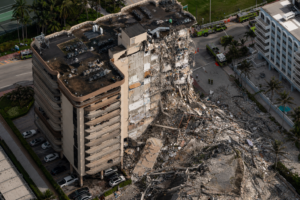
In the years since the collapse of Champlain Towers South in Surfside, Florida, few people involved with aging condominium buildings have questioned the need for better structural oversight. The disaster demonstrated in the starkest possible terms that deterioration can progress for years while owners debate repairs, defer expenditures and underestimate what is happening inside a building.
New Jersey responded with P.L. 2023, c.214, legislation requiring periodic structural inspections of certain condominium and cooperative buildings. It was an understandable response to a real problem. Buildings age. Concrete deteriorates. Steel corrodes. Waterproofing fails. Foundations move. Balconies and parking structures endure decades of exposure. A system that forces these conditions to be examined before they become emergencies should make buildings safer.
But that assumes something fundamental: that the inspections themselves are adequate.
Over the past several years, our work has increasingly brought us to condominium properties that have already been evaluated by another engineering firm. More recently, many of those properties have undergone the structural inspections now required in New Jersey. The associations often hand us the reports with considerable confidence. They have done what the law required. An engineer has inspected the property. Nothing significant was identified. From the board’s perspective, one of the largest uncertainties surrounding an aging building has been resolved.
Then we inspect the building.
At more than a dozen properties, we have encountered conditions that are difficult to reconcile with the reassurance provided by the previous structural evaluation. Some differences between engineers are inevitable; existing-building engineering is not an exact science, and reasonable professionals can disagree about the significance of a condition or the appropriate timing of a repair. That is not what concerns us.
What concerns us are buildings where significant indicators of structural distress appear to have gone largely unaddressed.
At one approximately 40-unit condominium property, the evidence of building movement was extensive enough to affect the building’s operation. Floors were cracked. Sliding doors would no longer function correctly. There were significant indications of foundation settlement. Elsewhere at the same property, cantilevered structural beams exhibited deterioration, corrosion and deflection.
The association had recently received an engineering evaluation from a large firm. The report identified no structural repairs as necessary. Among the limited work it did recommend was replacement of siding at an upper chimney.
The contrast was remarkable. An association had hired an engineering firm for the purpose of understanding the structural condition of its building, yet conditions affecting the foundation and structural framing remained while a nonstructural siding item made its way into the recommendations.
The association did not believe it was ignoring its building. Quite the opposite. It believed it had done the responsible thing.
That distinction is at the center of the problem.
We encountered a similar situation at a large condominium property in North Jersey. The association had recently completed its structural evaluation and understood that evaluation to be reassuring. When we subsequently became involved, we found significant deficiencies within the parking structure that required serious attention.
Again, the troubling part was not simply the existence of deterioration. Deterioration in an aging parking structure is neither unusual nor necessarily evidence that someone has failed. The troubling part was the difference between the conditions we observed and the level of confidence the association had been given about its property.
After seeing variations of this scenario repeatedly, it is becoming difficult to treat them as isolated experiences.
The problem with a passing report
There is a peculiar risk created by mandatory inspections that is easy to overlook.
Before an inspection, uncertainty is visible. A board may know that its building is 30, 40 or 50 years old. Members may see cracks in concrete, rust on steel or water entering a garage and wonder what else they do not know. Uncertainty creates discomfort, and that discomfort can prompt investigation.
A reassuring engineering report changes the psychology of the building.
The next time a crack appears, someone can say the building was just inspected. When a door begins binding, the explanation may be that old buildings move. When corrosion becomes visible, there is less urgency because an engineer recently evaluated the structure. The report becomes the answer to questions that may not actually have been answered.
This is why a poor structural inspection has the potential to be more consequential than no inspection at all.
No inspection provides no assurance.
An inadequate inspection can provide false assurance.
And false assurance changes behavior.
It can influence whether a board authorizes additional investigation, whether repairs are accelerated or deferred, how reserve funds are allocated and how seriously future warning signs are treated. It can also influence what hundreds of unit owners believe about the building in which they live.
The words we just had the structural inspection carry enormous weight in a condominium boardroom.
They should.
The question is whether the system now developing in New Jersey consistently justifies that confidence.
A law can require an inspection. It cannot make the inspection good.
New Jersey’s legislation does not contemplate a meaningless walk-through. The law addresses the primary load-bearing system of covered buildings and requires a written report describing its condition and identifying necessary maintenance or repairs. It also calls for inspections to follow a protocol established by the American Society of Civil Engineers or a similar nationally recognized structural engineering organization.
On paper, that is a substantial obligation.
In practice, however, the quality of an existing-building investigation depends heavily on the person performing it, the amount of time spent at the property, the areas made accessible, the records reviewed, the conditions recognized and, perhaps most importantly, whether the engineer is willing to acknowledge when a visual observation is insufficient to reach a conclusion.
Existing buildings rarely present themselves neatly.
A steel beam may disappear into a wall precisely where water has been entering for years. A concrete surface can appear relatively intact while reinforcing steel corrodes below it. A coating may conceal deterioration. A balcony connection may be inaccessible. Foundation movement may first reveal itself through cracked finishes, uneven floors or doors that no longer fit their openings.
The answer to those conditions cannot always be found by looking harder.
Sometimes a probe is necessary. Sometimes concrete needs to be sounded. Sometimes measurements need to be taken and monitored. Sometimes historical drawings and repair records need to be reviewed. Sometimes finishes have to be opened. Sometimes testing is appropriate.
And sometimes the most important sentence an engineer can put in a report is not no repairs are required.
It is: We cannot determine the condition of this component without further investigation.
There is no professional weakness in saying that. Existing-building engineering requires recognizing the boundary between what is known and what is merely assumed.
Who checks the inspectors?
That leads to a question New Jersey may not yet have adequately answered.
If these reports are important enough for the state to require them, what mechanism ensures that the inspections behind them are meaningful?
A condominium board cannot realistically perform that function. Most board members are volunteers. Even a sophisticated board cannot be expected to determine whether an engineer adequately evaluated structural steel section loss, differential foundation movement, concrete deterioration or a concealed balcony connection.
A property manager cannot be expected to peer-review structural engineering.
The residents cannot do it.
The report therefore carries extraordinary authority precisely because almost everyone receiving it lacks the expertise to independently challenge it.
New Jersey requires reports to be provided to specified officials and enforcing agencies, but the existence of a filing requirement should not be confused with substantive engineering review. The state’s own implementation guidance raises important questions about the role local enforcing agencies actually play in enforcement of the structural integrity requirements.
This is the gap that deserves greater attention.
The state has created a system in which an engineering report can materially affect how a condominium association understands the safety of its building. Yet if an inspection fails to identify significant observable distress, there may be no practical second layer of review that catches the problem.
That is a dangerous place for any safety program to end.
The Jersey Shore makes the stakes higher
The issue is especially important in New Jersey’s coastal condominium communities.
From Long Beach Island through Atlantic City, Ventnor, Margate, Longport, Ocean City, the Wildwoods and Cape May, thousands of condominium units exist in buildings exposed to conditions that are particularly unforgiving of deferred maintenance.
Salt and moisture attack steel. Water finds failed joints and membranes. Chlorides accelerate reinforcement corrosion. Concrete cracks and spalls. Balcony edges deteriorate. Embedded metals corrode. Parking structures receive both coastal exposure and salts carried in by vehicles during winter. Small waterproofing failures can become structural repair projects when they are allowed to persist long enough.
North Jersey has a different building inventory but many of the same underlying problems: aging concrete garages, large multifamily structures, decades of repairs and alterations, water intrusion and buildings whose structural systems are partially concealed by architectural finishes.
The purpose of periodic structural inspection is particularly compelling in these environments.
Which is why the quality of those inspections matters so much.
The state should be asking a second question
The first question New Jersey asked after Surfside was essentially: Are we inspecting these buildings?
It was the right question.
Several years into implementation, the state should begin asking another:
Are the inspections working?
That does not require turning every structural report into a government engineering project. Nor does it require assuming that every disagreement between engineers represents a deficient inspection.
But a credible safety system needs feedback.
The state could audit a sample of submitted reports. It could establish clearer expectations for documenting the structural systems actually observed and areas that could not be accessed. Reports could distinguish explicitly between components observed to be satisfactory and components whose condition could not be determined. Photographic documentation could establish what was inspected at the time of the evaluation.
More importantly, certain observations—significant settlement, structural deflection, advanced corrosion, concrete deterioration or substantial displacement—should be difficult to close out with a conclusory statement when the underlying cause has not been established.
There should also be a way for the system to learn from major discrepancies. If substantial structural deterioration is discovered shortly after a required inspection reported no need for structural repair, that should be useful information. Not necessarily for punishment, but for determining whether inspection standards, guidance or oversight need to improve.
A system that never examines its misses cannot know how often it is missing.
The smoldering problem
None of this is an argument against New Jersey’s structural inspection law.
The state was right to act.
The greater danger would be assuming that passage of the law solved the problem it was designed to address.
Structural deterioration does not care whether a report has been filed. Corrosion continues beneath paint. Water continues through failed membranes. Foundations continue to move. Concrete continues to deteriorate.
A report changes none of those things unless the inspection accurately identifies the conditions and the findings lead to appropriate action.
That is what makes the pattern we are seeing so concerning.
A condominium with obvious deterioration and no structural inspection has a problem that everyone can understand: the building has not been adequately evaluated.
A condominium with the same deterioration and a reassuring structural report has a much more complicated problem.
The owners believe it has.
The board believes it has.
The manager believes it has.
The report is in the file.
The statutory requirement has been satisfied.
And somewhere inside the building, the deterioration continues.
That is the smoldering problem New Jersey should be paying attention to.
The success of the state’s structural integrity law should not ultimately be measured by how many inspections are completed or how many reports are filed. It should be measured by whether significant structural deterioration is being found early enough to do something about it.
New Jersey has taken an important step by requiring aging condominium buildings to be examined.
Now it needs to make sure that being inspected and being safe do not become mistaken for the same thing.
Lasher provides structural engineering, building evaluation, restoration planning and construction services for condominium and multifamily properties throughout New Jersey. The examples discussed above have been generalized to protect the identities of the properties, condominium associations and other professionals involved.
This article reflects observations from our work with existing buildings and is intended to encourage discussion about structural inspection quality and oversight. It is not intended as an allegation regarding any particular engineering firm or professional.