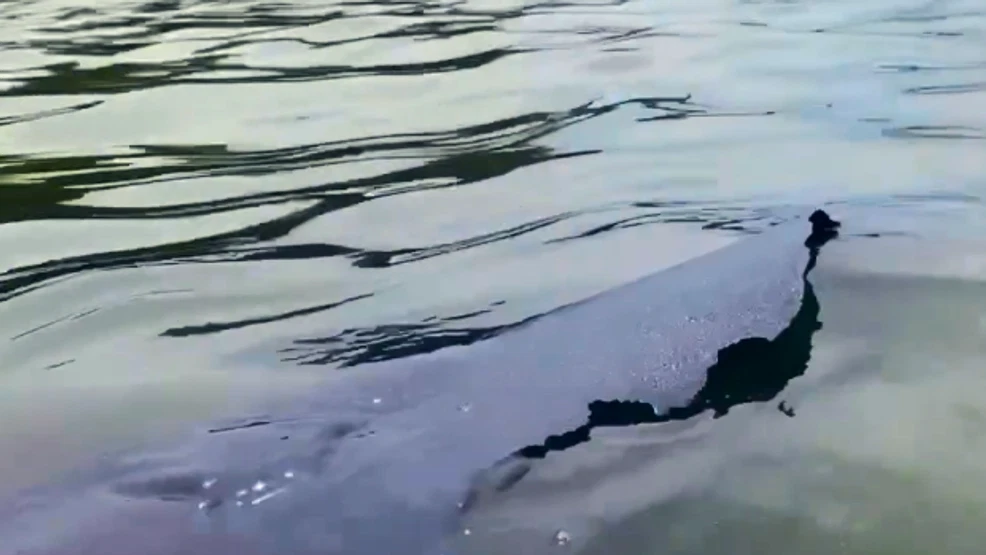
On June 18, 2026, national news outlets began reporting that portions of the newly coated Lincoln Memorial Reflecting Pool were already exhibiting peeling and visible distress shortly after completion.
For many observers, the reports were surprising.
For us, they were not.
Days before the failure became national news, we submitted a written technical concern regarding the coating system being installed at the Reflecting Pool. In that correspondence, we identified several specific risk factors that, in our professional opinion, created a substantial likelihood of premature coating failure.
Among those concerns were elevated substrate moisture conditions, continuous saturation exposure, moisture vapor transmission, adhesion loss, osmotic blistering, intercoat delamination, premature deterioration, and concerns regarding surface preparation.
At the time, we had not visited the site. Our observations were based solely upon publicly available photographs, our experience with immersion coatings, and decades of involvement in structural restoration and waterproofing projects.
The purpose of the letter was not criticism.
The purpose was prevention.
What made the concerns noteworthy was not that a coating might eventually fail. Every coating system has a service life. What concerned us was the potential for early failure and the specific mechanisms through which that failure could occur.
When coating systems are installed over concrete substrates that remain saturated or contain elevated moisture levels, the coating film can become trapped between two competing forces.
Water above.
Moisture below.
As moisture attempts to migrate through the concrete, pressure can develop beneath the coating film. Depending upon the coating chemistry, substrate condition, and environmental exposure, that pressure can manifest as blistering, adhesion loss, peeling, delamination, discoloration, and premature system breakdown.
Those were the exact concerns outlined in our correspondence.
Today, the discussion surrounding the Reflecting Pool has focused on algae, maintenance challenges, vandalism, and operational issues. While those matters may be relevant to the overall condition of the facility, they do not eliminate the need to examine the underlying coating system itself.
The more important question remains the same one we raised before the failure occurred.
Was the coating system compatible with the actual substrate and immersion conditions present within the basin?
Was moisture adequately evaluated before application?
Was the surface preparation sufficient to achieve long term adhesion?
Were the environmental conditions suitable for installation and cure?
Were field conditions consistent with the manufacturer’s requirements for immersion service?
Those questions matter because coating failures rarely begin on the day they become visible.
Most coating failures begin weeks, months, or years earlier through decisions involving design, preparation, material selection, and installation.
The visible failure is simply the final chapter of a process that started long before the public noticed it.
Whether the ultimate cause proves to be moisture related, preparation related, material related, or a combination of factors will require proper forensic investigation.
What cannot be ignored, however, is that the very failure mechanisms identified in advance are now among the primary technical issues that deserve investigation.
That is why experienced restoration consultants exist.
Not to explain failures after they happen.
To identify them before they occur.