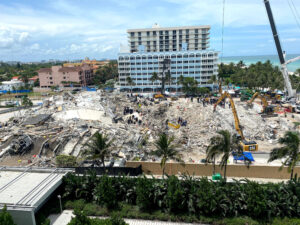
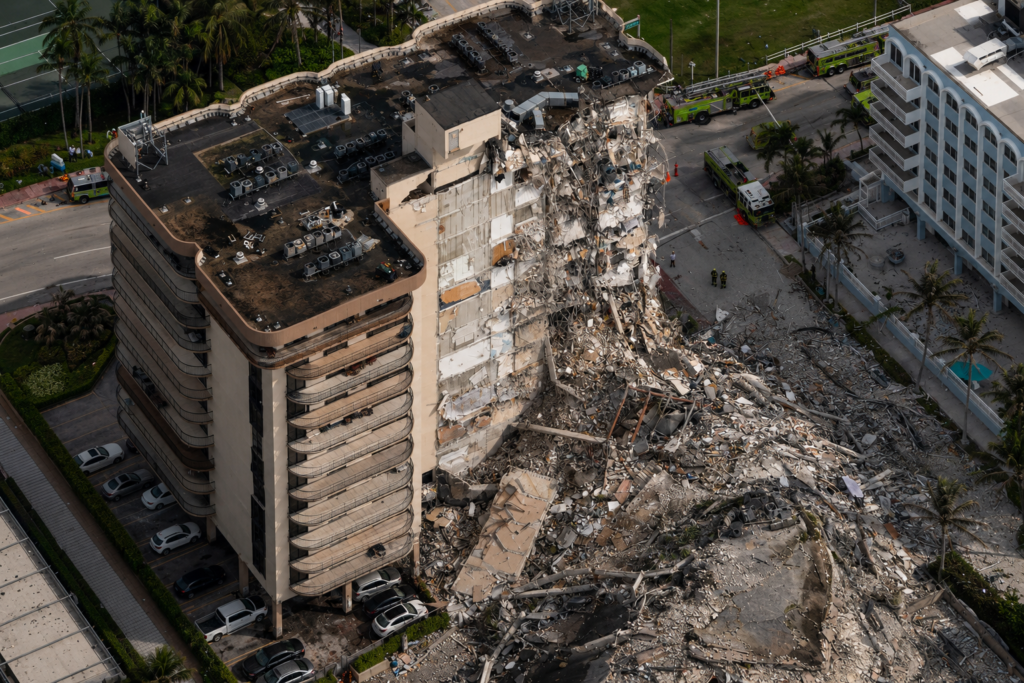
At 1:22 a.m. on June 24, 2021, a section of the 12-story Champlain Towers South condominium in Surfside, Florida, collapsed without warning.
Within seconds, 98 people lost their lives. Families were forever changed. An ordinary residential building became the site of one of the deadliest structural failures in modern American history.
The tragedy shocked the engineering and construction industries, but perhaps more importantly, it exposed a reality that had existed for decades. Buildings rarely fail because of a single crack, one leaking pipe, or one rusted beam. They fail when years of small problems accumulate, inspections are delayed, repairs are deferred, and warning signs become accepted as normal.
The collapse permanently changed how engineers, contractors, condominium boards, legislators, insurers, and property managers think about aging buildings.
Today, its impact can be seen far beyond Florida. New Jersey, along with several other states, has adopted new structural inspection and reserve funding requirements designed to identify deterioration before it becomes a catastrophe.
For condominium associations throughout New Jersey, the lessons from Surfside are no longer distant headlines. They have become part of everyday building management.
Buildings Age Every Day
Many people think of buildings as permanent.
In reality, every structure begins aging the day construction is completed.
Concrete slowly absorbs moisture. Reinforcing steel corrodes when water and oxygen reach it. Sealants dry out. Waterproofing membranes fail. Expansion joints lose elasticity. Balconies move under repeated loading. Parking garages endure thousands of vehicle cycles every week.
Along the Jersey Shore, the process accelerates.
Salt air, coastal winds, freeze-thaw cycles, driving rain, ultraviolet exposure, and decades of seasonal weather create an environment that is especially demanding on reinforced concrete and exposed structural steel.
None of these conditions are unusual. Every engineer expects them.
What matters is whether they are identified early enough to be repaired.
Catastrophic Failures Rarely Happen Overnight
One of the biggest misconceptions after Surfside was that the building suddenly collapsed without warning.
Investigations found evidence of long-term deterioration affecting structural elements. Numerous professionals had identified concerns over the years. Like many aging buildings, the property faced difficult decisions involving repair priorities, construction costs, reserve funding, and the complexity of restoring occupied structures.
While the exact sequence of failure remains the subject of extensive technical analysis, one lesson is widely accepted across the engineering community: structural failures are often the end result of deterioration that develops over many years rather than a single isolated event.
That understanding has reshaped the industry’s approach to preventive maintenance.
The Cost of Deferred Maintenance
Condominium boards face difficult decisions.
Every repair recommendation affects homeowners financially. Reserve contributions are rarely popular. Special assessments can be controversial. Large restoration projects disrupt residents and require months of planning.
The temptation to postpone work is understandable.
Unfortunately, deterioration does not pause while boards debate budgets.
A failed sealant joint may allow water behind a facade.
Water may begin corroding reinforcing steel.
As steel rusts, it expands.
The expanding steel cracks surrounding concrete.
Those cracks admit additional moisture.
The deterioration accelerates.
What began as a relatively inexpensive maintenance project eventually becomes structural concrete restoration involving balconies, beams, columns, or parking garages.
Repair costs can multiply several times over because maintenance was delayed rather than completed when deterioration first appeared.
Water Is Often the Real Enemy
When structural engineers investigate aging buildings, water is almost always part of the story.
Water intrusion damages far more than finishes.
Over time it can contribute to:
- Reinforcing steel corrosion
- Concrete spalling
- Masonry deterioration
- Structural steel corrosion
- Deck deterioration
- Balcony distress
- Parking garage damage
- Foundation settlement in certain conditions
- Mold and interior damage
- Premature failure of waterproofing systems
Stopping water before it reaches structural components is one of the most effective investments a condominium association can make.
Proper roofing, waterproofing, sealant replacement, facade maintenance, and drainage improvements frequently prevent much larger structural restoration projects years later.
Why New Jersey Changed Its Laws
Following Surfside, lawmakers across the country reevaluated how aging condominium buildings are maintained.
New Jersey responded by requiring structural inspections for many condominium and cooperative buildings while strengthening reserve study and reserve funding requirements.
The objective is not simply regulatory compliance.
It is early detection.
The earlier deterioration is identified, the more repair options associations have.
Early intervention generally means:
- Lower repair costs
- Better planning
- Fewer emergency projects
- Less disruption to residents
- Improved life safety
- Greater protection of property values
These requirements recognize a simple reality: maintaining a building is almost always less expensive than rebuilding one.
What Experienced Contractors Look For
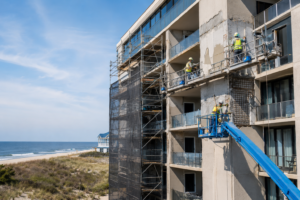
When Lasher Construction evaluates a structural restoration project, visible damage is only part of the story.
Experienced restoration contractors understand that cosmetic symptoms often indicate larger issues hidden beneath the surface.
We routinely investigate conditions including:
- Concrete cracking
- Spalled concrete
- Exposed reinforcing steel
- Balcony deterioration
- Beam and girder distress
- Masonry movement
- Failed waterproofing systems
- Water infiltration
- Parking garage deterioration
- Rusting structural steel
- Exterior facade movement
- Long-term moisture intrusion
The objective is not simply repairing what is visible.
It is identifying why deterioration occurred and ensuring repairs address the underlying cause.
Construction Alone Is Not Enough
Successful structural restoration requires more than replacing damaged concrete or installing new waterproofing.
Every project depends on coordination between engineers, contractors, architects, testing agencies, building officials, property managers, and condominium boards.
Engineering determines what must be repaired.
Construction determines how those repairs are executed safely, efficiently, and with minimal disruption to residents.
The best projects combine sound engineering with disciplined construction management, quality control, careful scheduling, and clear communication.
Every Repair Protects the Next Generation
Structural restoration is often viewed as an expense.
In reality, it is an investment in the longevity of a building.
When repairs are completed correctly, they extend service life, improve safety, preserve property values, and reduce the likelihood of future emergency work.
Residents may never notice the reinforcing steel hidden inside a repaired beam.
They may never see the waterproofing beneath a balcony.
They may never appreciate the engineering behind a restored parking garage.
That is precisely the point.
Successful structural restoration is meant to become invisible. Its value is measured by decades of reliable performance rather than immediate recognition.
The Lesson That Should Never Be Forgotten
The Surfside collapse changed building regulations, reserve funding requirements, engineering practices, and public awareness across the United States.
Its greatest lesson is not about one building in Florida.
It is about every aging building.
Structures communicate long before they fail. Water stains, cracks, spalled concrete, corroded steel, deteriorated balconies, and recurring leaks are often symptoms of larger conditions that deserve professional evaluation.
Ignoring those warnings rarely makes repairs less expensive.
Responding early almost always does.
For condominium associations across New Jersey, proactive inspections, realistic reserve funding, and properly managed structural restoration projects represent more than compliance with a new law. They represent a long-term commitment to protecting residents, preserving investments, and ensuring that buildings remain safe for generations to come.
At Lasher Construction, we partner with condominium associations, engineers, architects, and property managers to deliver complex structural restoration projects throughout New Jersey. From structural concrete repair and beam replacement to facade restoration, waterproofing, balcony rehabilitation, and parking garage restoration, our focus is helping communities address deterioration before it becomes an emergency.
The most successful restoration project is the one that prevents the next headline.